
Bhupendra GC, Kathmandu
Nepal’s national cricket team has been consistently engaged in international fixtures over the past year. From T20 World Cup qualifiers to the ICC Cricket World Cup League 2 tri-series, along with practice matches and bilateral series, the schedule has kept the team occupied. However, during this same period, domestic cricket has remained almost nonexistent.

If we look at other cricketing nations where the sport is a priority, domestic competitions do not come to a halt due to international commitments. In fact, a strong national team is built on a robust domestic structure that runs parallel to international schedules. In Nepal, before the arrival of Cricket Association of Nepal (CAN), various private organizers and local bodies regularly hosted tournaments. These competitions not only provided players with match exposure but also helped them financially.
With CAN’s return, there was hope that domestic and grassroots cricket would become more structured and systematic. Unfortunately, the reality has turned out to be quite the opposite. Before CAN resumed its operations, players remained active throughout the year with at least three franchise leagues, the Prime Minister Cup, the Manmohan Memorial Cricket Tournament, and several local competitions.
It is understandable that franchise leagues were halted after CAN’s reinstatement, as organizing them falls under its responsibility. In the initial years, the COVID-19 pandemic and time constraints were valid reasons. However, over the past year, CAN has cited the national team’s international commitments as the reason for not organizing domestic competitions. The last senior domestic tournament was the T20 National Championship held last year. Since then, there has been a complete void.
This lack of domestic cricket has directly impacted the national team. Recently, during the ICC Cricket World Cup League 2 series in the United States, openers Kushal Bhurtel and Aasif Sheikh were ruled out of the first match due to injuries. In a surprising move, CAN called up Subash Khakurel, despite him not being in form over the past three years. Ideally, a young and in-form player should have been selected. However, due to the absence of regular competitions and logistical challenges like visa issues, he was chosen.
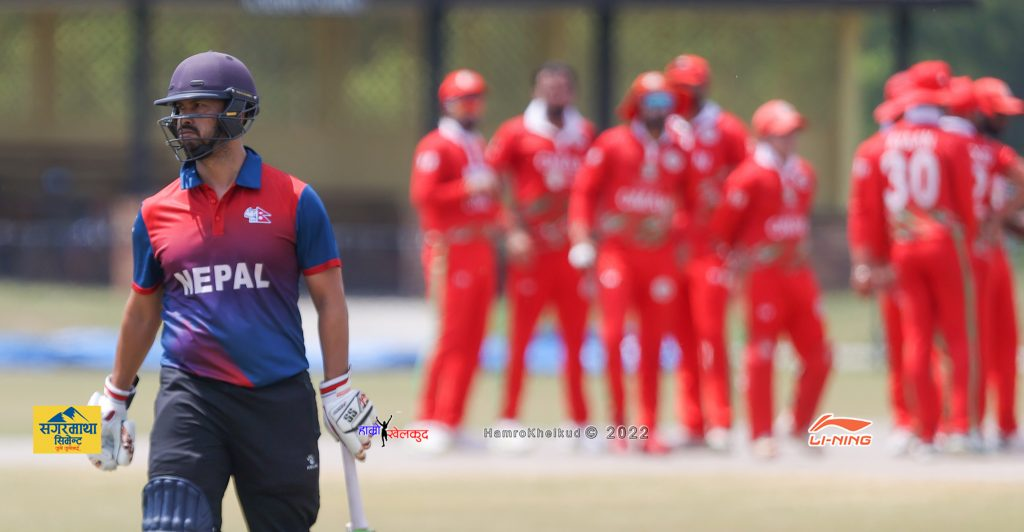
Khakurel got an opportunity in the first match but was dismissed for just three runs against Oman and did not feature again. Had there been consistent domestic competitions, a more in-form player could have been selected, potentially delivering better results. Moreover, Aasif Sheikh might not have had to risk his career by playing while injured.
Nepal has been playing regularly at the international level, but there is no solid basis for player selection. Performances from a single tournament are being used as criteria for selection for over a year. While domestic success does not guarantee international performance, it plays a crucial role in identifying and nurturing talent. That process requires time, effort, and consistent competition.
Regular tournaments also ensure that the absence of a key player due to injury does not severely impact the team, as there are always match-ready replacements. Without match exposure, relying solely on training is insufficient for competitive performance.
The biggest victims of this situation are young players. There is a long list of aspiring cricketers who are working hard and waiting for opportunities to showcase their talent. Players like Pratis GC, Nandan Yadav, Arjun Saud, and Narayan Joshi have been affected due to the lack of domestic tournaments. Similarly, middle-order batters Bhim Sharki and Sumit Maharjan are also waiting for opportunities to prove themselves.

Last year’s Prime Minister Cup was played in T20 format, while Nepal has been playing mostly One Day Internationals recently. Despite having ODI status, Nepal has not organized a 50-over domestic tournament for the past two years. This contradiction highlights a major structural flaw.
CAN has made commendable efforts in keeping the national team busy internationally, though results have not been very encouraging. This effort deserves appreciation. However, focusing only on a limited group of 20 players while neglecting hundreds of others is not a sustainable approach for long-term development.
A cricketing nation cannot progress by engaging only a handful of players. CAN did show promise by organizing the U-19 National League last year. However, after failing to qualify for the World Cup, there have been no significant programs to keep the U-19 team active. The U-19 women’s team’s disappointing performance in the Asia qualifiers further reflects the lack of preparation.
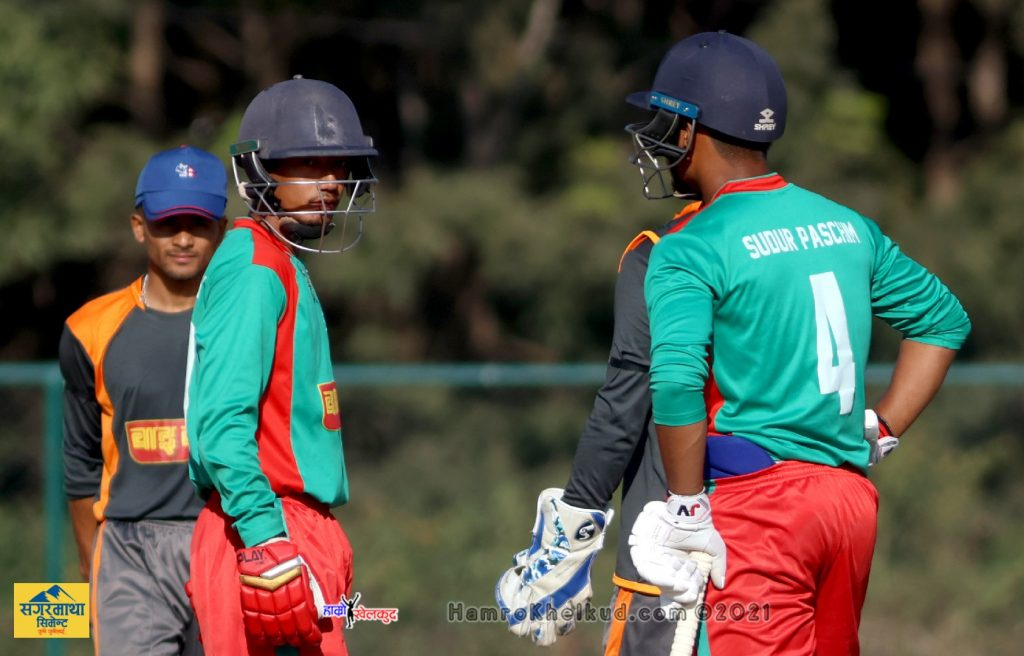
While CAN has not been entirely inactive, it has failed to deliver at the scale required. Club cricket, academies, U-15 and U-16 tournaments have been absent for a long time. School-level cricket, once a major platform for discovering new talent, has almost disappeared.
There is also no clear pathway for players to return to the national team after being dropped. Players like Gyanendra Malla, Lokesh Bam, Kushal Malla, Sagar Dhakal, Shahab Alam, Bibek Yadav, and Bhim Sharki lack a proper platform to make a comeback.
In contrast, in countries like England, players such as Dom Sibley are sent back to domestic cricket to regain form and confidence before returning to the national team. Continuous domestic competitions allow for performance-based selection and reintegration.
In Nepal, however, with only one tournament a year, a single poor performance can cost a player their place in the national team, and they may have to wait an entire year for another opportunity—if it comes at all. Many careers have stalled or ended under such circumstances.

CAN has completed three years since its reinstatement. While the initial two years were affected by COVID-19, administrative challenges, and financial constraints, the past year offered sufficient time to implement meaningful changes.
Key initiatives such as a structured domestic league system, multi-day cricket, development of Nepal A team, international exposure for young talents, establishment of a national cricket academy, grassroots programs, and consistent age-group tournaments should have been prioritized.
Nepal currently lacks experienced batters, wicketkeepers, left-arm pacers, and left-handed batters. Without regular competitions, identifying and developing such players is nearly impossible.
Cricket Manager Binod Das is seen as a figure of hope within CAN. With a strong background as both a player and a coach, many current national players were groomed under his guidance. While he has contributed to organizing events like the Kathmandu Mayor’s Cup and various international tours, expectations from him regarding domestic and grassroots development remain unfulfilled.

There are also concerns about political influence in regional cricket and player selection. Additionally, the technical side of the game is suffering, with frequent controversies surrounding umpiring decisions and a lack of proper training and refresher courses for officials.
Infrastructure remains another major concern. Apart from the TU Cricket Ground, most pitches in the country are substandard. The situation at Mulpani Cricket Ground has been particularly disappointing.
Investing only in a limited number of national players will not yield significant results. The current outcomes clearly reflect this reality.
CAN President Chatur Bahadur Chand has stated that the packed international schedule has not allowed players enough rest, making it difficult to organize domestic tournaments. However, this appears more like a failure in scheduling and planning rather than a genuine constraint.
National team captain Sandeep Lamichhane has also emphasized the importance of continuous domestic cricket, stating that more matches lead to better performance and understanding of the game.
Young players like Arjun Saud and Pratis GC have highlighted the lack of match exposure as a major barrier to their development. Training alone is not enough; players need real match situations to identify and improve their weaknesses.
CAN has announced plans to organize domestic competitions in a round-robin format starting next season, which is a positive step. For Nepal to progress, it is essential to have at least three major domestic tournaments: T20, One Day, and multi-day formats, involving a minimum of ten teams.
Ultimately, the foundation of Nepali cricket lies in grassroots and domestic structures. Without strengthening this base, it is unrealistic to expect the national team to achieve greater success on the international stage. Domestic cricket must continue alongside international commitments-there is simply no alternative.
